 IRF/Urban Brändström
ALIS_4D
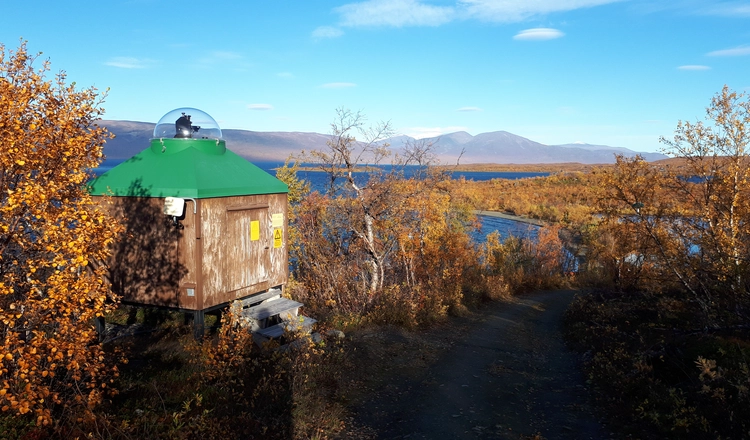
ALIS_4D is IRF’s measurement system consisting of five light-sensitive cameras designed for auroral studies. The measurement stations are arranged in a grid approximately 50 kilometres apart, enabling an overlap in their fields of view. This overlap allows researchers to perform auroral tomography and observe the aurora in three dimensions.
Studies of the aurora’s different colours help researchers to better understand the physics of near-Earth space, known as the ionosphere, which begins at an altitude of around 100 kilometres. An important aspect is improving our knowledge of how to protect Earth from space weather events.
The measurement stations, located within Kiruna Municipality, are situated at the following sites:
- On the roof above the optics laboratory at IRF’s headquarters in Kiruna
- Esrange Space Center
- Abisko
- Tjautjas, near Gällivare
- Silkkimuotka, near Nedre Soppero
High temporal resolution and specific wavelength (colour)
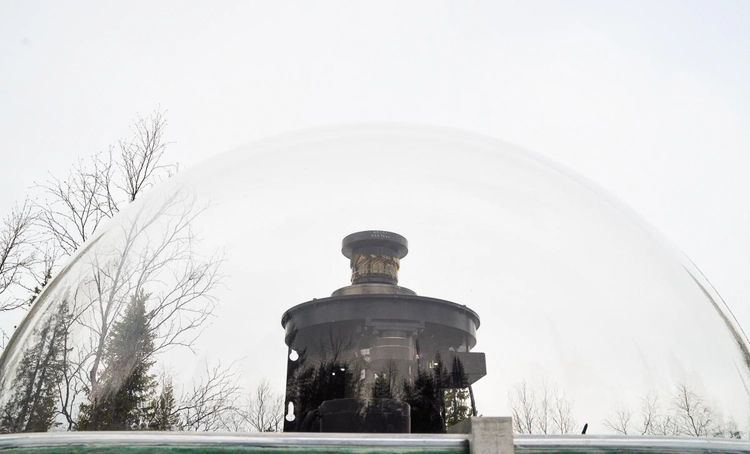
The cameras in the measurement system are highly light-sensitive, capture images with high temporal resolution, and provide information on specific wavelengths (colours) of the aurora. This enables scientists to study in detail the interactions between particles and atoms or molecules in the ionosphere. Scientists are particularly interested in measuring how much light reaches each pixel, and the overlapping fields of view enable tomographic reconstruction of the aurora.
Urban Brändström, optical auroral scientist, responsible for ALIS_4D and Head of Observatory at IRF, explains how the measurement system works:
Imagine computed tomography of the brain. It involves similar mathematics and makes it possible to obtain precise information from the specific volume element being studied. This, in turn, provides us as researchers with information about the incoming particles that cause the aurora. This information can be compared with measurements from satellites and from radar facilities such as EISCAT_3D. ALIS_4D will be used together with the EISCAT_3D radar system, an ionospheric radar, to improve our understanding of plasma physics.
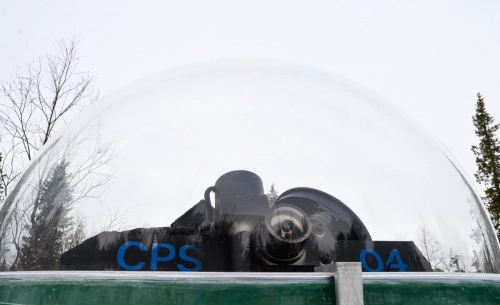
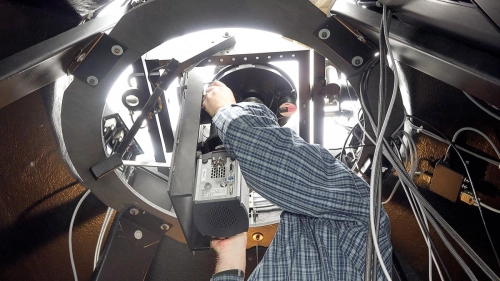
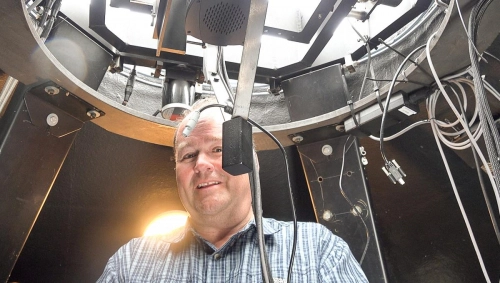
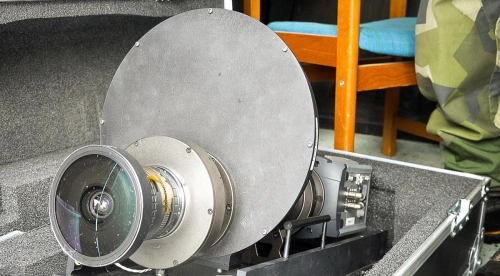
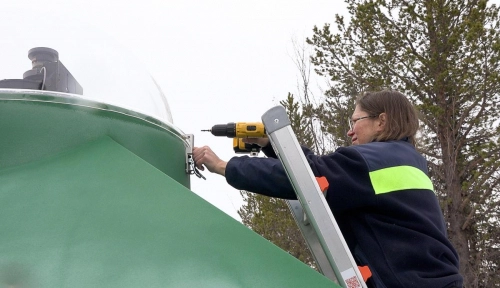
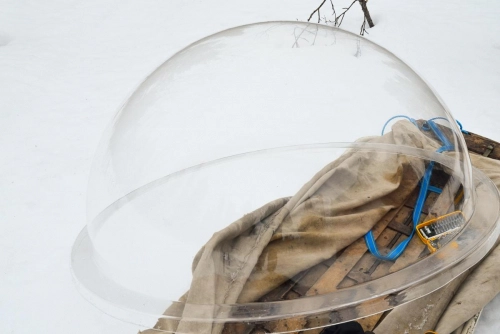
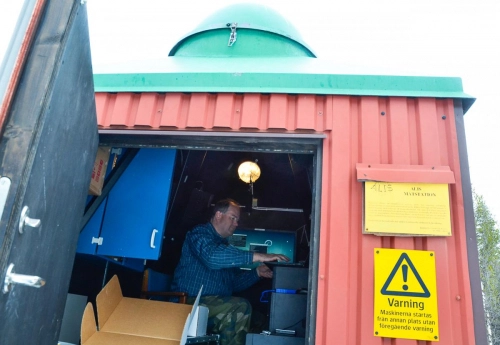
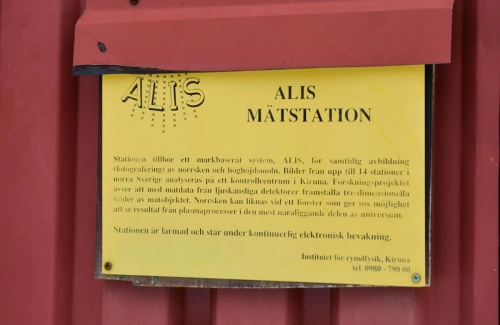
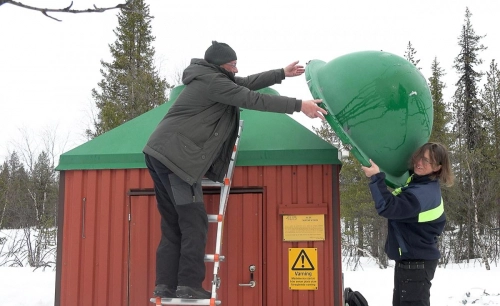
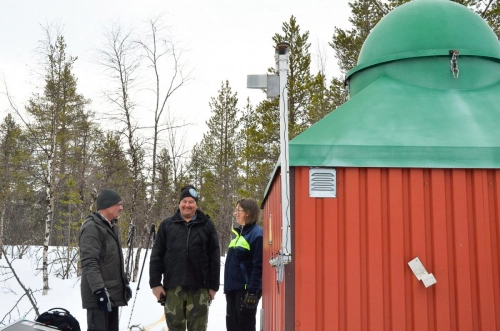
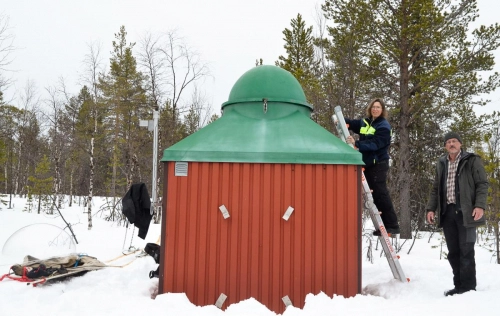
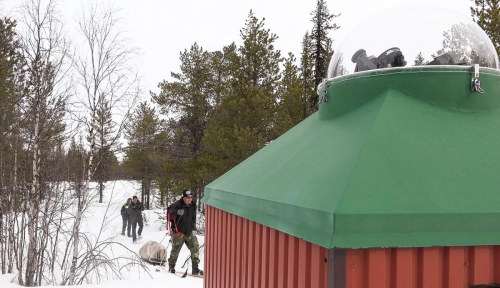
Video and images – ALIS_4D in Silkkimuotka
Camera for infrared light
Near IRF’s headquarters in Kiruna is a measurement station equipped with an infrared camera.