 ESA
ESAAfter more than two decades, Cluster bids farewell – IRF has been involved from the start
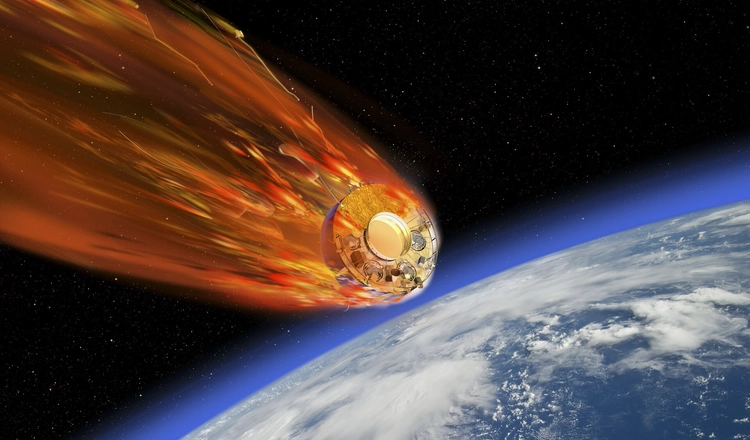
After more than two decades in space, the European Space Agency ESA’s Cluster mission has now come to an end. On 31 August, the Samba satellite re-entered Earth’s atmosphere, followed by Tango on 1 September. Tango’s re-entry marked the final end of Cluster, a mission that transformed our understanding of Earth’s magnetic environment.
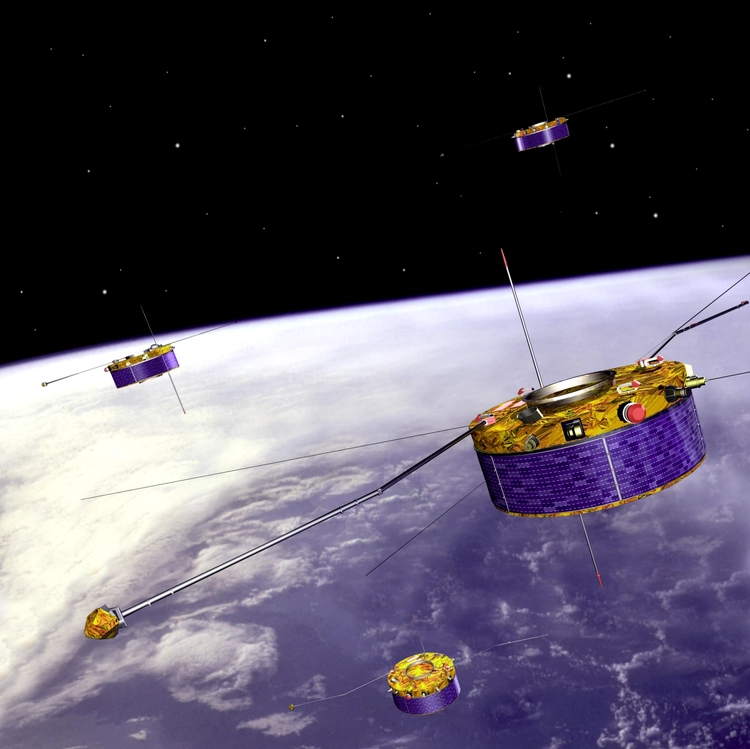
The four Cluster satellites were identical, each carrying eleven scientific instruments. The Swedish Institute of Space Physics (IRF) was responsible for one of the instruments and also contributed to two others.
The Cluster satellites – Salsa, Samba, Rumba and Tango – were launched in pairs on 16 July and 9 August 2000. Cluster was originally designed for a mission lifetime of 27 months, but the satellites went on to support scientific research for more than two decades.
The scientific phase of the mission ended in September 2024, when Salsa re-entered Earth’s atmosphere. Since then, the remaining satellites have been decommissioned one by one through planned re-entries.
Four satellites provided a new view of the space around Earth
Cluster’s primary objective was to investigate Earth’s magnetosphere and how it is affected by the solar wind.
Cluster’s four identical satellites flew in formation, with distances between them ranging from a few kilometres to 10,000 kilometres. By taking measurements at several locations simultaneously, scientists could study the space environment in three dimensions and determine whether an observed change was due to the satellites being in different locations or to conditions in space actually changing over time.
IRF instruments on all four satellites
IRF has played a central role in Cluster throughout the mission.
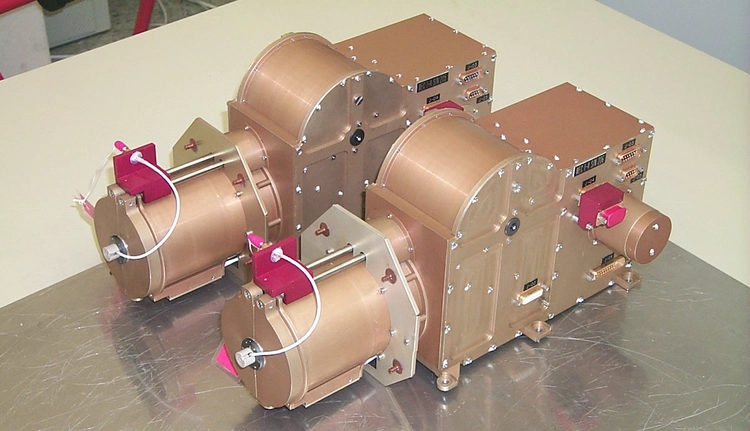
IRF in Uppsala was responsible for EFW (Electric Field and Wave experiment), an instrument carried by all four satellites that measured electric fields and waves. The four EFW instruments were built in collaboration with scientific teams in the United States, the Netherlands, Finland and Norway, as well as the Alfvén Laboratory at KTH Royal Institute of Technology. Professor Emeritus Mats André at IRF was Principal Investigator for EFW from 2000 to 2023.
IRF in Kiruna also contributed to Cluster through the CIS (Cluster Ion Spectrometry experiment) and RAPID (Research with Adaptive Particle Imaging Detectors) instruments.
“A 24-year space mission is not driven by technology alone - it is driven by people. We have been a fantastic team and have worked together throughout all these years, solving problems and adapting as circumstances changed. The fact that we have been able to keep EFW operating continuously for 24 years is, when you think about it, absolutely mind-blowing.”, says professor Professor Yuri Khotyaintsev, who has worked with Cluster since its launch and is now Principal Investigator for EFW.
More than two decades of new discoveries
For more than two decades, Cluster gave scientists new opportunities to understand what happens in the space around Earth and how our planet is affected by the solar wind.
Scientists at IRF have used data from Cluster for scientific studies throughout the mission. Among other things, the measurements have contributed to a better understanding of magnetic reconnection – a process in which magnetic fields change their structure and reconnect in a new configuration. When this happens, energy is released that can, among other effects, accelerate particles to much higher speeds. The Cluster mission made it possible for the first time to observe the small regions where this process takes place.
Cluster has also provided new opportunities to study Earth’s bow shock, the region where the supersonic solar wind is slowed down as it encounters Earth’s magnetic environment. In a study led by IRF scientist Andrew Dimmock, scientists were able to take advantage of two Cluster satellites being very close to one another to investigate structures on scales of just a few kilometres.
“Cluster was the first space mission to demonstrate the power of taking measurements with several satellites simultaneously. We learned how to do science with multiple spacecraft. And Cluster paved the way for studying plasma at multiple scales. We are now aiming for the next step with Plasma Observatory. There, we will be able to study several scales simultaneously and investigate how processes at different scales are connected.”, says Yuri Khotyaintsev.
The end of Cluster in space
Even the satellites’ final journey through the atmosphere is being used to gather new knowledge.
Because the four Cluster satellites are identical, their re-entries provide an unusual opportunity to compare how the same type of satellite breaks up under different conditions. This knowledge can be used to develop future satellites that are more likely to be completely destroyed during re-entry, thereby reducing risks on the ground and impacts on the atmosphere.
With Tango’s re-entry, the last of the four satellites that together made up Cluster has disappeared from space. The data and scientific results from the mission’s more than two decades of operations, however, will continue to be used in space research for many years to come.
“Cluster has created what I would call the best archive of space plasma data ever assembled. It contains more than two decades of measurements from different parts of Earth’s space environment, and I believe Cluster data will continue to enable new discoveries for many years to come.”, says Yuri Khotyaintsev.