 Celine Lundqvist
Swedish lunar instrument from Kiruna delivered to Türkiye
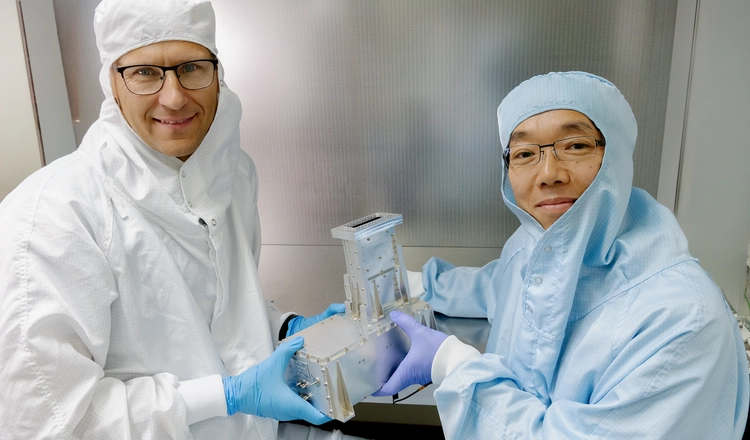
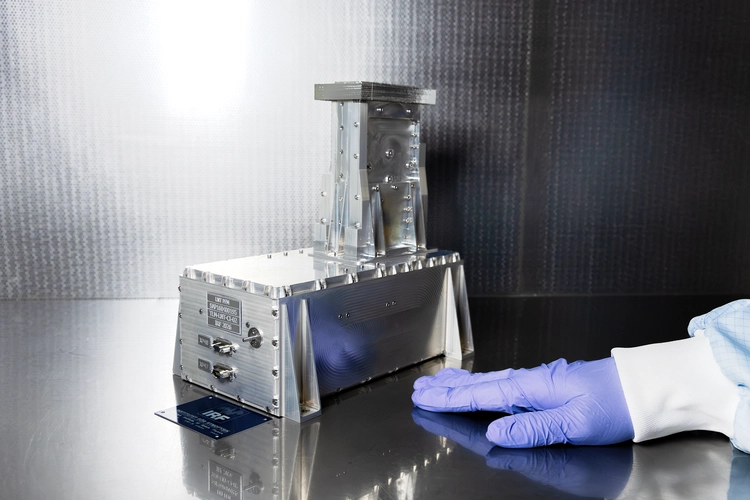
In June, the Swedish Institute of Space Physics (IRF) delivered the flight model of the Lunar Neutrals Telescope (LNT), developed in Kiruna, to TÜBİTAK UZAY in Ankara, Türkiye. The instrument will be integrated onto the Turkish lunar Mission-1 (AYAP-1), which is scheduled for launch in 2027.
The delivery marks an important milestone in the development of LNT and the beginning of the project’s next phase – integration and testing of the instrument with the spacecraft.
Upon arrival in Ankara, delivery acceptance tests were successfully carried out by personnel from IRF and TÜBİTAK UZAY.
This achievement is the result of many years of dedicated work by the LNT team and close collaboration with our colleagues at TÜBİTAK UZAY. We are now looking forward to the next phase of the mission, where LNT will be integrated with the spacecraft and prepared for its journey to the Moon, says Dr. Manabu Shimoyama, scientist at IRF in Kiruna and Principal Investigator for LNT.
Two models with different purposes
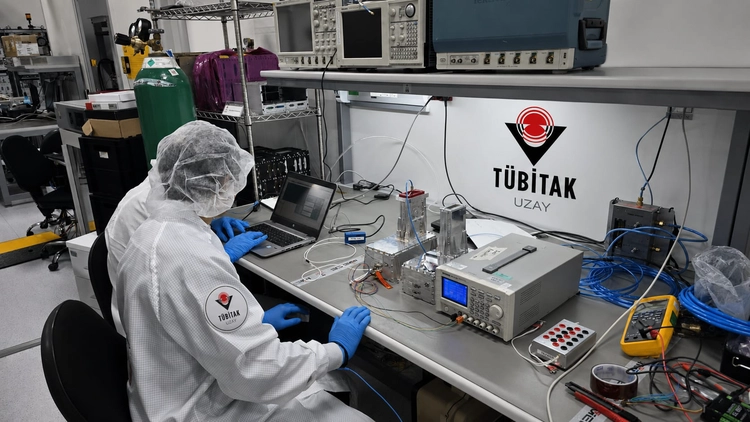
The photo above show two versions of LNT.
The instrument on the left is the flight model – the flight-ready instrument that will be integrated onto the spacecraft and ultimately operate in the lunar orbit. The instrument on the right is the electrical model, which was delivered to TÜBİTAK UZAY in 2024 and has been used to develop and test the interface between the instrument and the spacecraft’s onboard computer and power supply system.

Why is a tube connected to the instrument?
The flight model can be recognised by the tube connected to it during ground handling. This provides a continuous flow of pure nitrogen gas, protecting the instrument’s sensitive detectors from moisture and other contaminants.
Studying how the solar wind interacts with the Moon
From lunar orbit, the Lunar Neutrals Telescope will investigate how the solar wind – the stream of charged particles emitted by the Sun – interacts with the lunar surface. Its measurements will allow us to better understand the effects of the solar wind on the Moon’s near-surface environment, reveal how the lunar exosphere – the Moon’s extremely thin atmosphere – is maintained, and provide new insights into permanently shadowed regions near the lunar poles where water ice may have been preserved.