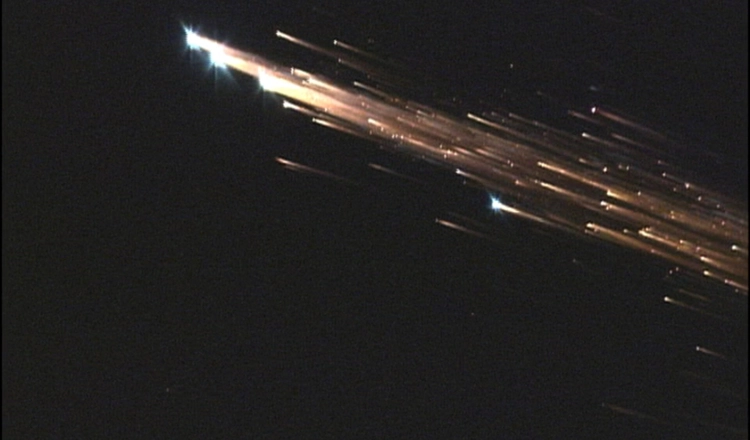
 ESA/NASA
IRF scientists contribute to international whitepaper on the environmental impact of spaceflight
Scientists from the Swedish Institute of Space Physics (IRF) have contributed to a new international whitepaper examining how the rapid growth of spaceflight may affect Earth’s atmosphere. The report reviews the current state of scientific knowledge, identifies key research gaps and outlines recommendations for the research community, the space industry and policymakers.
The global space sector is expanding at an unprecedented pace. Fewer than 300 satellites were launched annually before 2015. By 2025, that number had increased to more than 2,800 each year, with further growth expected in the years ahead.
The pollution includes radical atoms such as aluminum and lithium,which changes the upper atmospheric chemistry such as ozone. Before it is toolate, we need to understand the risks these emissions pose today and in thefuture, and how we can reduce their impact, says IRF scientist Masatoshi Yamauchi.
For decades, allowing satellites and used rocket parts to burn up during atmospheric re-entry has been considered the safest way to reduce space debris and minimize the risk of debris reaching the ground. However, the rapid increase in launches means that growing amounts of material are now being deposited into Earth’s upper atmosphere.
As more rockets are launched and more satellites reach the end of their missions, scientists are increasingly studying what happens when spacecraft re-enter Earth’s atmosphere and burn up. The whitepaper concludes that, while important progress has been made, significant scientific uncertainties remain.
IRF’s expertise on atmospheric re-entry
IRF scientists contributed expertise in several areas highlighted by the whitepaper, particularly those related to what happens after spacecraft begin to burn up in the atmosphere.
Masatoshi Yamauchi contributed expertise on destination of the materials released when satellites and rocket parts burn up during re-entry. His work also explores how ionospheric satellites can be used to monitor the changes in the entire upper atmosphere.
Scientist Daniel Kastinen contributed research on identifying where satellites and rocket components burn up during atmospheric re-entry using observational data.
The whitepaper also reflects ongoing research at IRF. Later this year, a new PhD student will join the institute through the Swedish Space Research School (SSRS) to investigate atmospheric re-entry processes. The national graduate school, led by KTH Space Center and funded by the Swedish National Space Agency, supports doctoral research in strategically important areas of Swedish space science.
Together with IRF’s contribution to the international whitepaper, the new PhD project highlights the institute’s ongoing commitment to understanding the environmental effects of spaceflight.