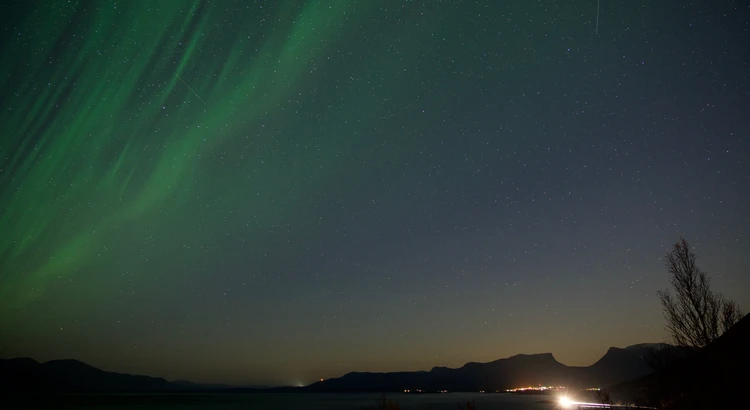
 Hans Nilsson/IRF
Long-term observations of near-Earth space in focus as scientists meet in Abisko
Long-term measurements are essential for understanding how the atmosphere and the space environment closest to Earth change over time. For this reason, scientists from across the Nordic region will gather in Abisko at the end of April, where the Swedish Institute of Space Physics (IRF) is hosting a Nordic observatory meeting.
This is a relatively small but important meeting, where scientists collaborate on measurements of the Earth’s magnetic field, near-Earth space, the atmosphere, and its uppermost layer, the ionosphere.
It is about coordinating and ensuring measurements from several countries in order to understand how changes in near-Earth space affect us over time,” says Urban Brändström, Head of Observatory at IRF.
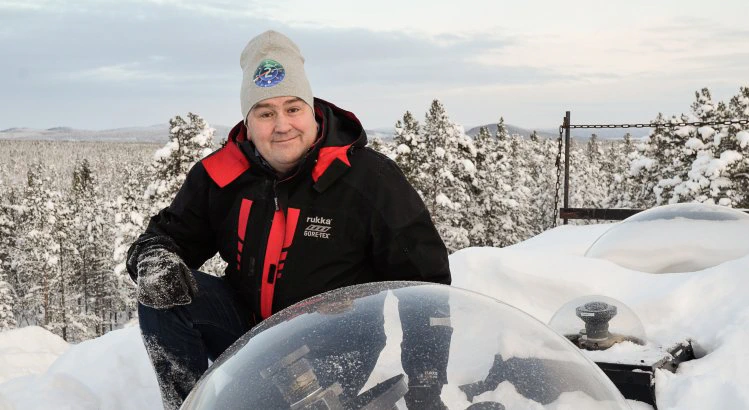
The meeting is part of the Nordic Observatory Collaboration (NOC), which began in Tromsø in 2018. Its aim is to coordinate long-term observations in Finland, Sweden, Norway and Svalbard. Scientists meet twice a year and operate advanced measurement stations that collect data.
Long data series – key to understanding
IRF has a government mandate to collect, store, and make available long-term data - often spanning 50 to 100 years - from near-Earth space. This information is used both to monitor current phenomena, such as the aurora and variations in the Earth’s magnetic field, and to analyse long-term changes in the near-space environment.
We are collecting data for scientists who have not yet been born, while at the same time the measurements are vital for monitoring what is happening in real time,” says Urban.
Many changes in the atmosphere and near-Earth space occur slowly and can only be analysed using long data series. At the same time, the data are used to monitor ongoing events, such as space weather, which can affect power supply and communications.
Around fifty Swedish observatory instruments
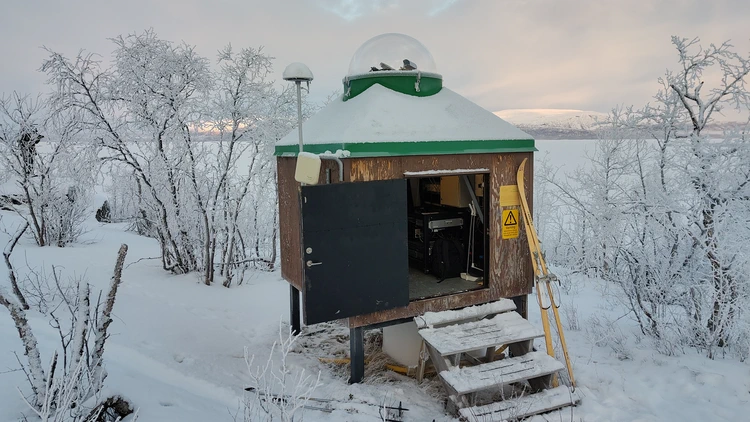
IRF’s observatory operations, the Kiruna Atmospheric and Geophysical Observatory, comprise around fifty instruments, ranging from Abisko in the north to Skåne in the south. In Kiruna, measurements have been conducted since the late 1940s.
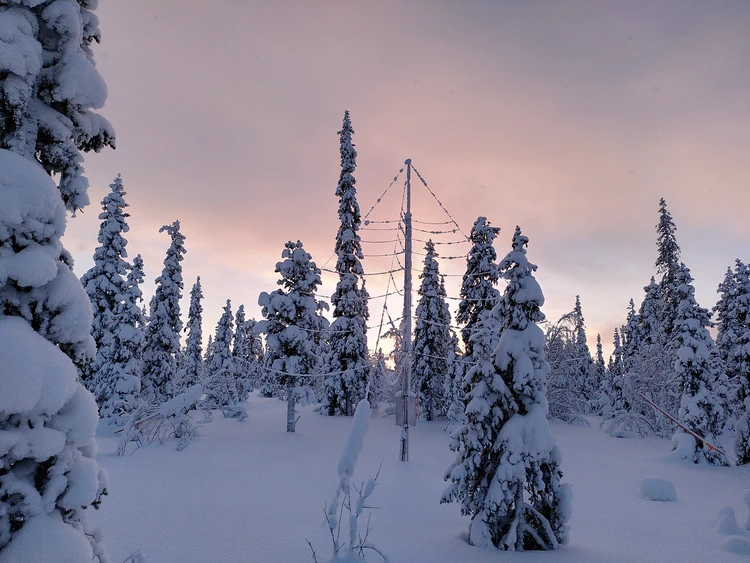
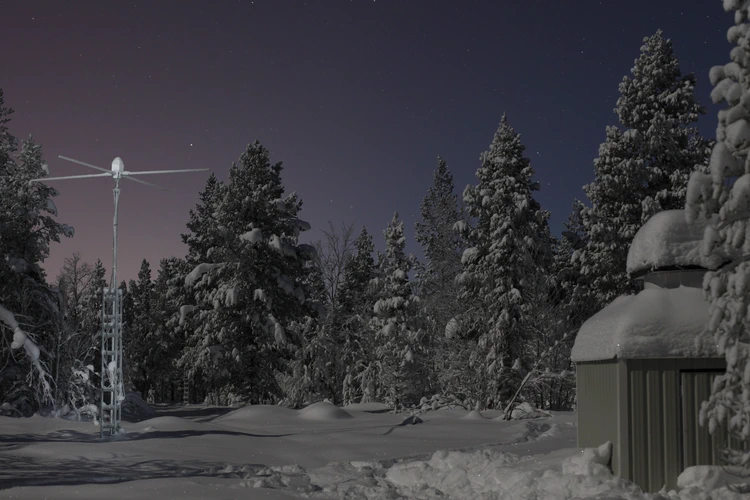
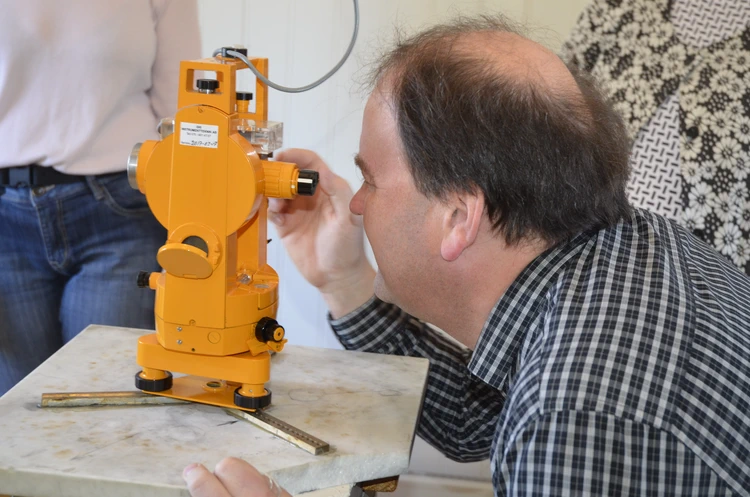
These measurements are carried out using several types of instruments. Advanced cameras record the aurora from different observation stations to create 3D images, magnetometers measure variations in the Earth’s magnetic field, and radio-based instruments are used to study the near-Earth space environment. Infrasound stations detect low-frequency sound, while other instruments measure trace gases in the atmosphere, such as ozone.
Measurements of this kind have been carried out for more than 100 years at the Sodankylä Geophysical Observatory and the Tromsø Geophysical Observatory, while many of the world’s long-term measurement programmes gained momentum during the International Geophysical Year in 1957.