 Carl Lindwall, Business Sweden
IRF – an international contributor to space research
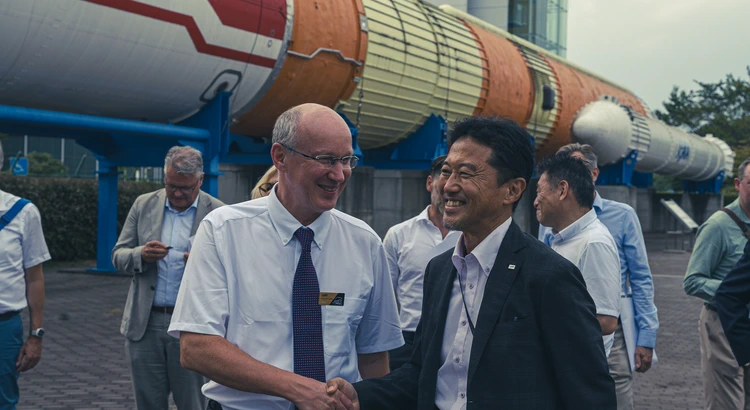
The Swedish Institute of Space Physics (IRF) works in close collaboration with research organisations, space agencies and universities around the world. From international space missions to joint instrument development projects, IRF participates in research that extends far beyond Sweden’s borders. Today, the institute collaborates with more than 50 organisations in Europe, the United States, India and Japan, among others.
IRF’s research includes studies of both Earth and a range of objects in the solar system, such as planets, moons, comets and asteroids. An important part of the research also focuses on the space environment near Earth, including space weather and the dynamics of the upper atmosphere. Here, the new international radar facility EISCAT_3D plays a central role. Using radar stations in northern Scandinavia, researchers can study how solar activity affects the space environment around Earth and also detect and track objects in orbit, contributing to research on space debris.
IRF participates in several international space missions led by space agencies in Europe (ESA), the United States (NASA), India (ISRO) and Japan (JAXA). During 2025, this work has included ESA’s Comet Interceptor mission and ISRO’s planned Venus Orbiter Mission. Collaboration with Türkiye on the country’s first lunar probe, TLM-1, has also continued.
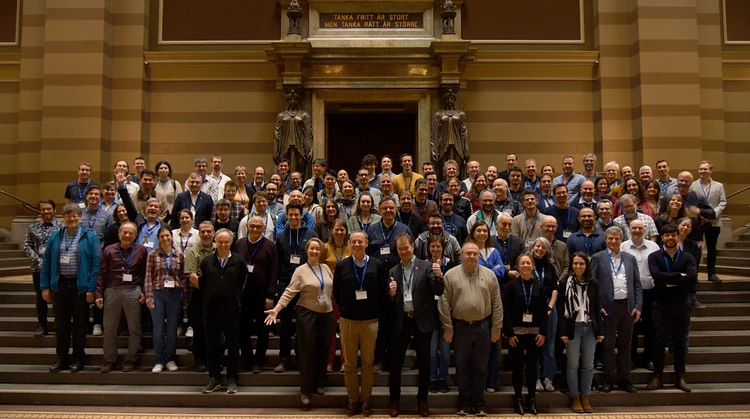
ESA is one of IRF’s most important partners in major space projects. Within ESA’s programme for future missions, IRF has a leading role in two candidate missions: M-MATISSE and Plasma Observatory. In 2025, ESA also appointed IRF to lead a Phase A study for the instrument package AstroLEAP, which is being developed together with seven European universities and research institutes for future studies of the Moon’s space environment.
IRF also collaborates with the Max Planck Institute for Solar System Research in Göttingen on an instrument for ESA’s RAMSES mission, which will study the asteroid Apophis during its close passage by Earth in 2029.
The institute’s international character is also reflected in its working environment. At IRF, researchers, engineers and doctoral students from many parts of the world work together, including from Japan, the United States, France, Italy, Colombia, South Korea, the United Kingdom, Germany and Finland.
Through these collaborations, IRF contributes to the development of new space instruments, international research projects and space missions that increase our understanding of the space environment - from processes near Earth to phenomena farther out in the solar system.
You can read more about our international collaborations in the Annual Report 2025. (PDF, 3MB)