 Celine Lundqvist
Instrument developed in Kiruna tested for ESA comet mission
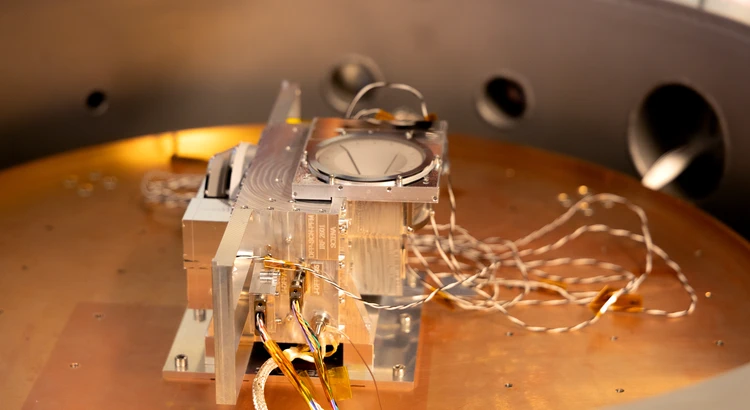
An instrument developed at the Swedish Institute of Space Physics in Kiruna has recently completed an important environmental test ahead of a future space mission. The instrument SCIENA (Solar wind Cometary Ions and Energetic Neutral Atoms), which will fly aboard ESA’s Comet Interceptor spacecraft, has now completed a thermal vacuum cycle test.
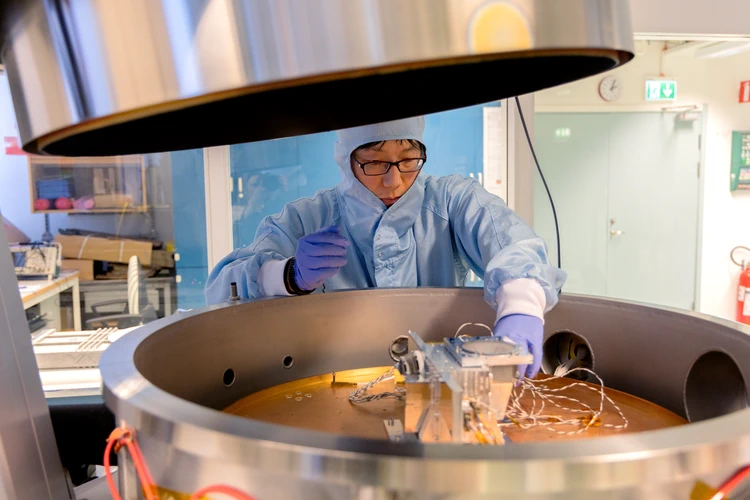
During the test, the instrument was placed inside a thermal vacuum chamber, where it was exposed to repeated temperature cycles in vacuum. The goal was to confirm that SCIENA can both survive these conditions and continue to operate correctly after being subjected to them.
The thermal vacuum (TVAC) test marks the conclusion of the instrument’s environmental test campaign – a series of tests designed to verify that the flight hardware can survive the conditions it will experience during launch and throughout its mission in space.
The next step in the test programme is functional and performance testing, where scientists and engineers verify that the instrument performs as expected before delivery.
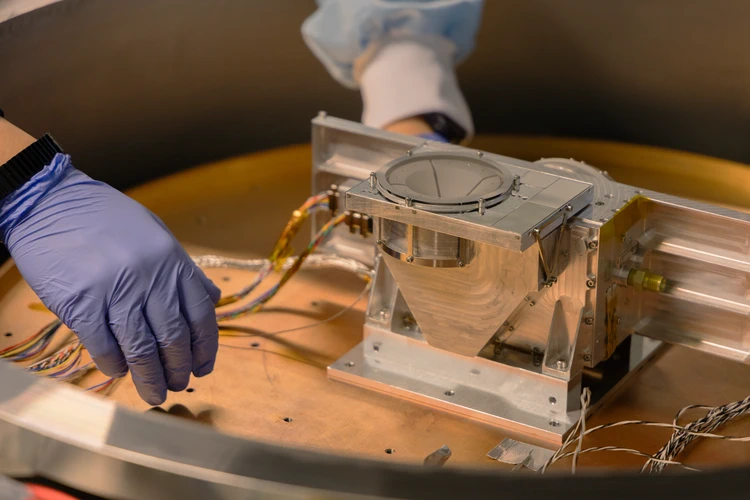
SCIENA is being developed at the Swedish Institute of Space Physics in Kiruna and is one of IRF’s contributions to ESA’s Comet Interceptor mission. The instrument will measure particles from the solar wind and study how they interact with the gas surrounding a comet.
The Comet Interceptor spacecraft is planned for launch in 2029. It will wait in space until a suitable comet from the outer regions of the solar system is discovered, after which the spacecraft will fly past the comet to study its environment up close.