 IRF
IRFResearch at IRF – some of our women scientists
International Women’s Day is observed worldwide on 8 March. At the Swedish Institute of Space Physics, researchers, engineers and doctoral students from many different countries work together to advance our understanding of the space environment and to develop instruments for international space missions.
In connection with the day, we highlight a few of the women at IRF whose work contributes to research on topics ranging from the aurora and the solar wind to space instruments used on missions to planets and comets.
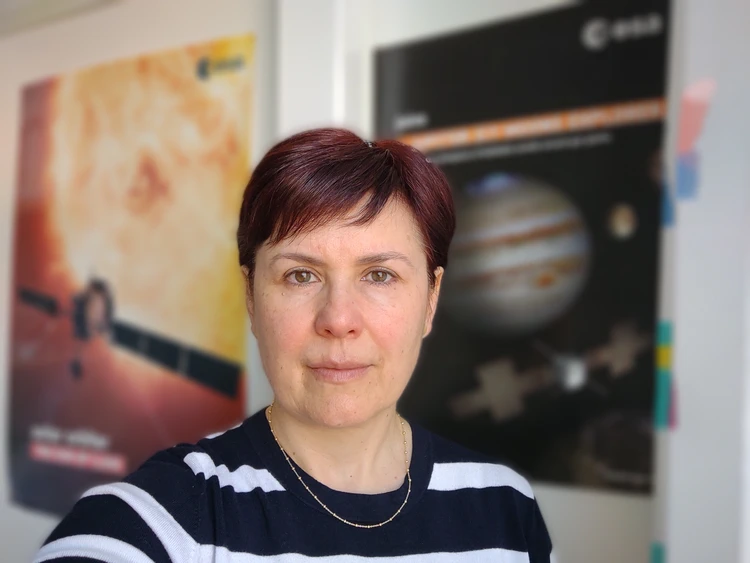
Emilya Yordanova is a scientist who for more than two decades has studied how the Sun shapes the plasma environment throughout the inner solar system. Using data from missions such as WIND, ACE, Ulysses, SOHO, Solar Orbiter, STEREO, Polar, Cluster and MMS, she investigates how solar eruptions and the solar wind evolve as they propagate through space and interact with the interplanetary medium and Earth’s near-space environment.
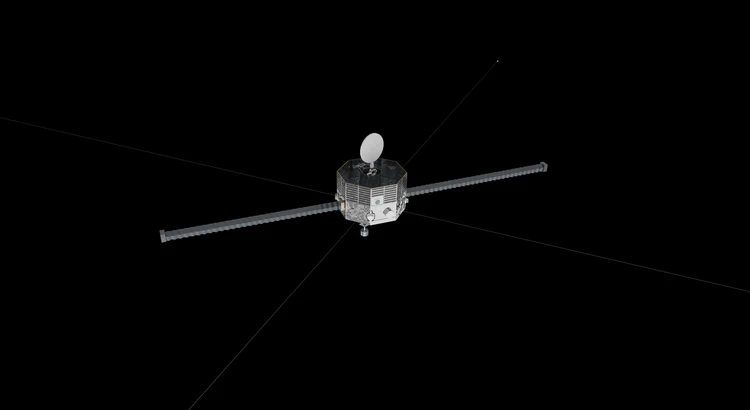
Her research spans both large-scale processes — including heliospheric turbulence, the propagation of solar storms and global plasma dynamics — and small-scale mechanisms that govern energy transfer, plasma heating and magnetic reconnection.
Her most recent project focuses on how the Sun shapes the plasma environment of Mercury, based on observations from the MESSENGER and BepiColombo spacecraft.

Michiko Morooka began her scientific career studying the physics of the aurora. She examined auroral structures using ground-based imaging data and investigated auroral particle physics through observations from near-Earth spacecraft such as Akebono and Cluster.
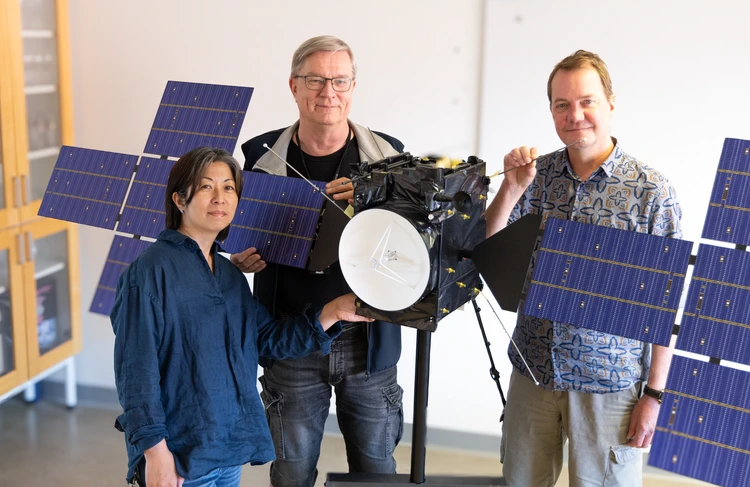
She later worked on the Cassini–Huygens mission, which explored Saturn’s magnetosphere, where auroral phenomena also occur. Since then she has contributed to several planetary missions, including MAVEN (Mars), BepiColombo (Mercury), Solar Orbiter (Sun) and Juice (Jupiter).
Her research now spans a broader range of topics beyond auroras and magnetospheres, including planetary rings, cryovolcanic activity on icy moons and interplanetary dust. Planetary space plasma physics remains a field with many open scientific questions.

Tomoe Taki is a postdoctoral researcher at IRF where she studies the aurora. She analyses data from a rocket experiment conducted in 2023 within the BROR project. In the experiment, artificial glowing clouds were created and observed using IRF’s auroral observation system ALIS_4D. Through this work she contributes to a better understanding of the electrical forces associated with the aurora.

At IRF, Vicki Cripps works as a Quality Engineer with responsibility for export control and chemical compliance. Her role combines regulatory oversight with hands-on involvement in space instrumentation projects.
As a research engineer she contributes to the full lifecycle of scientific space instruments — from design and development to analysis, assembly and testing.
She is currently serving as Project Manager for an instrument suite on Plasma Observatory, one of three candidate missions in the European Space Agency’s M7 programme. The instrument suite includes both hardware and software contributions from five European countries and requires extensive international coordination. The team is currently going through the Instrument Preliminary Requirements Review (IPRR). ESA is expected to decide which mission will proceed in June, with a potential launch planned for 2037.
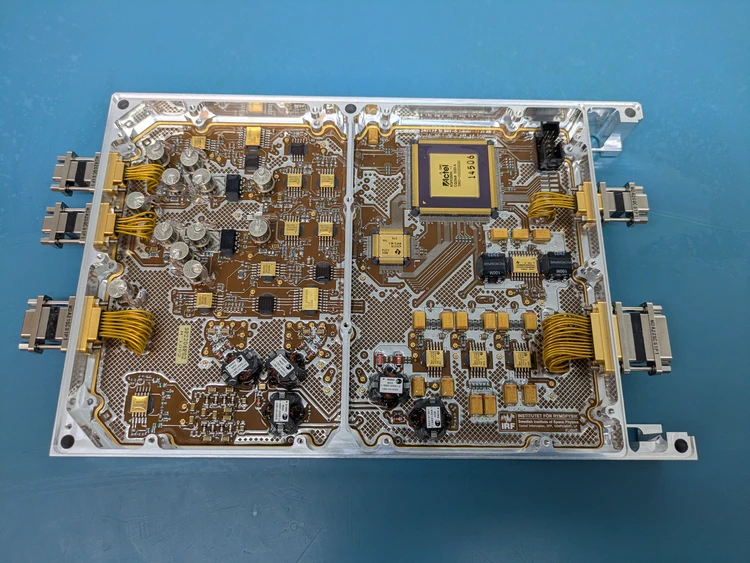
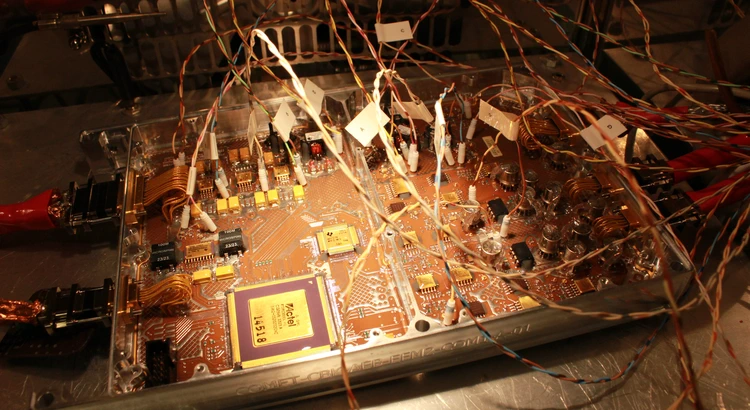
Cripps and her colleagues have also delivered two electronic boards to ESA’s Comet Interceptor mission - one flight model and one flight spare. As Quality Manager she most recently carried out the final inspections, prepared the units for shipment to France for integration and compiled the complete compliance and verification documentation to ensure that the hardware meets ESA’s quality and reliability standards.

Hayley Williamson is a research scientist at the Swedish Institute of Space Physics and works primarily with data processing and analysis. She has worked at IRF for six years and studies how the solar wind — a stream of charged particles originating from the Sun — interacts with different bodies in the solar system.
Her recent work focuses on data from IRF’s ion instrument on the BepiColombo spacecraft, a joint mission developed by the European Space Agency (ESA) and the Japan Aerospace Exploration Agency (JAXA) that is currently on its way to Mercury.
Although BepiColombo has not yet entered orbit around Mercury, the spacecraft has already completed six flybys of the planet during the past five years, providing valuable scientific data.
Mercury is a particularly interesting object from a space physics perspective. The planet is very small and lacks an atmosphere, like the Moon, yet it has a magnetic field similar to Earth’s. This creates a unique interaction with the solar wind.
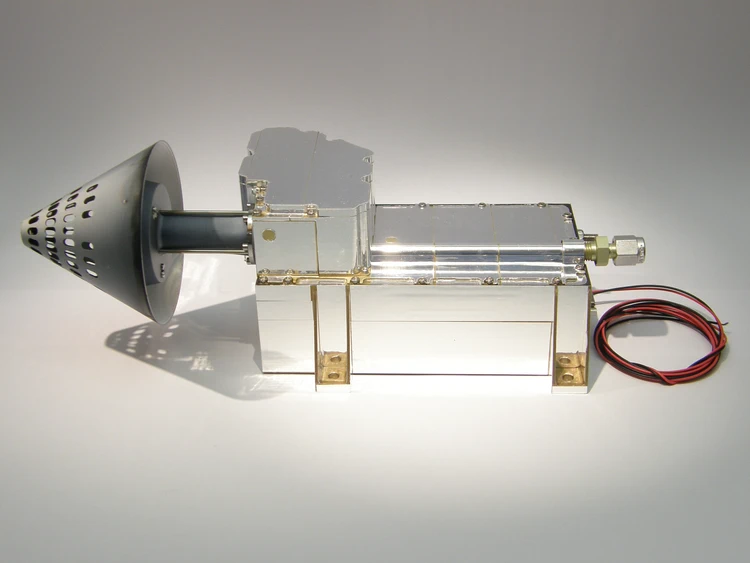
Mercury’s magnetosphere is highly dynamic, with particles circulating around the planet within minutes. Using data from IRF’s ion instrument MIPA, Williamson studies these rapidly changing plasma processes observed during BepiColombo’s flybys.
In addition to her scientific analysis, she is responsible for processing and archiving instrument data. She manages data from both MIPA and IRF’s instrument on the Mars Express mission, ASPERA-3, ensuring that the datasets are properly processed and validated for scientific use. Since data from ESA missions must be publicly archived, she also develops processing pipelines that ensure the data meet ESA’s standards and remain accessible for future research.