 Annelie Klint Nilsson/IRF
IRF instrument for Turkish lunar mission nears delivery after successful test
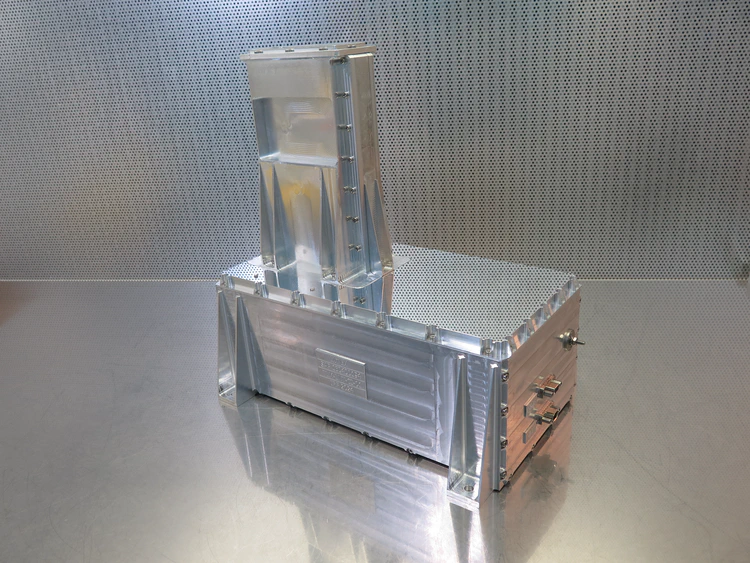
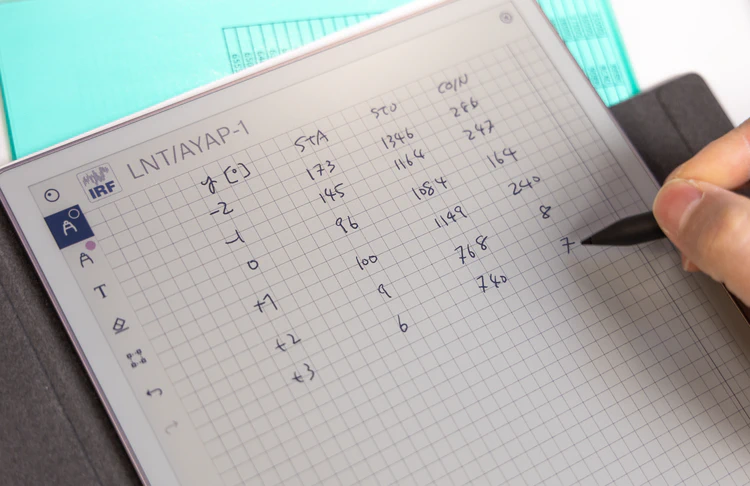
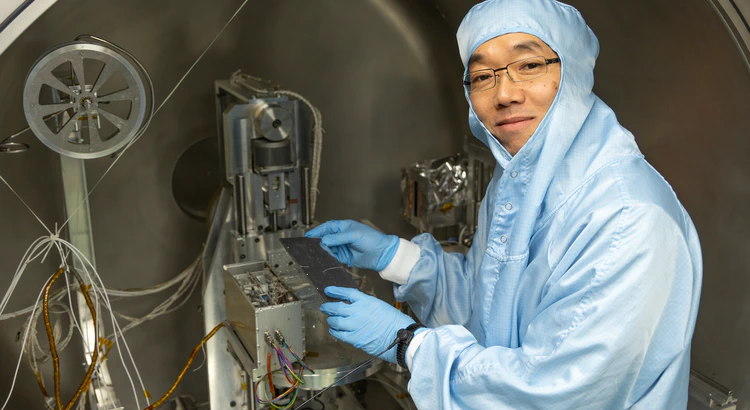
IRF’s Lunar Neutrals Telescope (LNT) has passed a major milestone on its way to the Moon, successfully completing its first performance test that confirmed the lunar instrument operates as intended under space-like conditions.
On board Turkey’s first lunar misson
The instrument will fly onboard the first Turkish lunar mission AYAP-1, developed by the Turkish Space Technologies Research Institute (TÜBİTAK UZAY). From lunar orbit, LNT will study how the solar wind interacts with the Moon’s surface environment by detecting energetic neutral atoms — a technique pioneered by IRF more than a decade ago.
We are very pleased to see our lunar instrument perform exactly as expected during the test. Operating the instrument under realistic conditions is a major step forward as we move toward delivery. The LNT project further extends IRF’s international collaboration and a very important milestone in advancing the field of the lunar environment, says Dr. Manabu Shimoyama, scientist at IRF in Kiruna and Principal Investigator for LNT.
Delivery planned for early 2026
Following final calibration and qualification activities, the flight model of the lunar instrument is planned to be delivered to the AYAP-1 spacecraft in early 2026 for the remaining spacecraft integration. IRF has built two models of the instrument:
Electrical Model, used for interface and operational testing with the spacecraft
- Flight Model, the fully qualified version that will fly to the Moon
With the successful performance test completed, the Flight Model has demonstrated its readiness for the next stages of mission preparation.
Continuing a strong lunar heritage
The Lunar Neutrals Telescope (LNT) will enable scientists to study how the solar wind interacts with the lunar surface in unprecedented detail.
During the AYAP-1 mission, the instrument will address key scientific questions, including:
- How the composition of the lunar surface varies across different regions
- How mini-magnetospheres formed around magnetic anomalies interact with the solar wind
- How permanently shadowed regions — potential reservoirs of ancient volatile materials such as water — respond to the solar-wind environment
Launch planned for early 2027
The AYAP-1 spacecraft will operate for about three months — with a possible extension to six months — in a 100-km circular lunar orbit above the lunar surface before concluding its mission with a controlled landing.
During the first week of December 2025, the Turkish team will visit Kiruna to test LNT together with the spacecraft interface unit. The launch of AYAP-1 is planned for early 2027.